
A seemingly minor temperature fluctuation in your furnace can trigger a devastating chain reaction: inconsistent product quality, unexpected downtime, missed delivery deadlines, and frustrated customers. Yet most manufacturers don’t recognize these warning signs until production delays have already damaged their bottom line and reputation.
Understanding exactly where furnaces fail—and why—empowers manufacturers to prevent costly disruptions before they cascade into full-scale production crises.
The Silent Culprit: Progressive Heat Loss
Heat loss rarely happens overnight. Instead, it develops gradually through several critical failure points that many operators overlook:
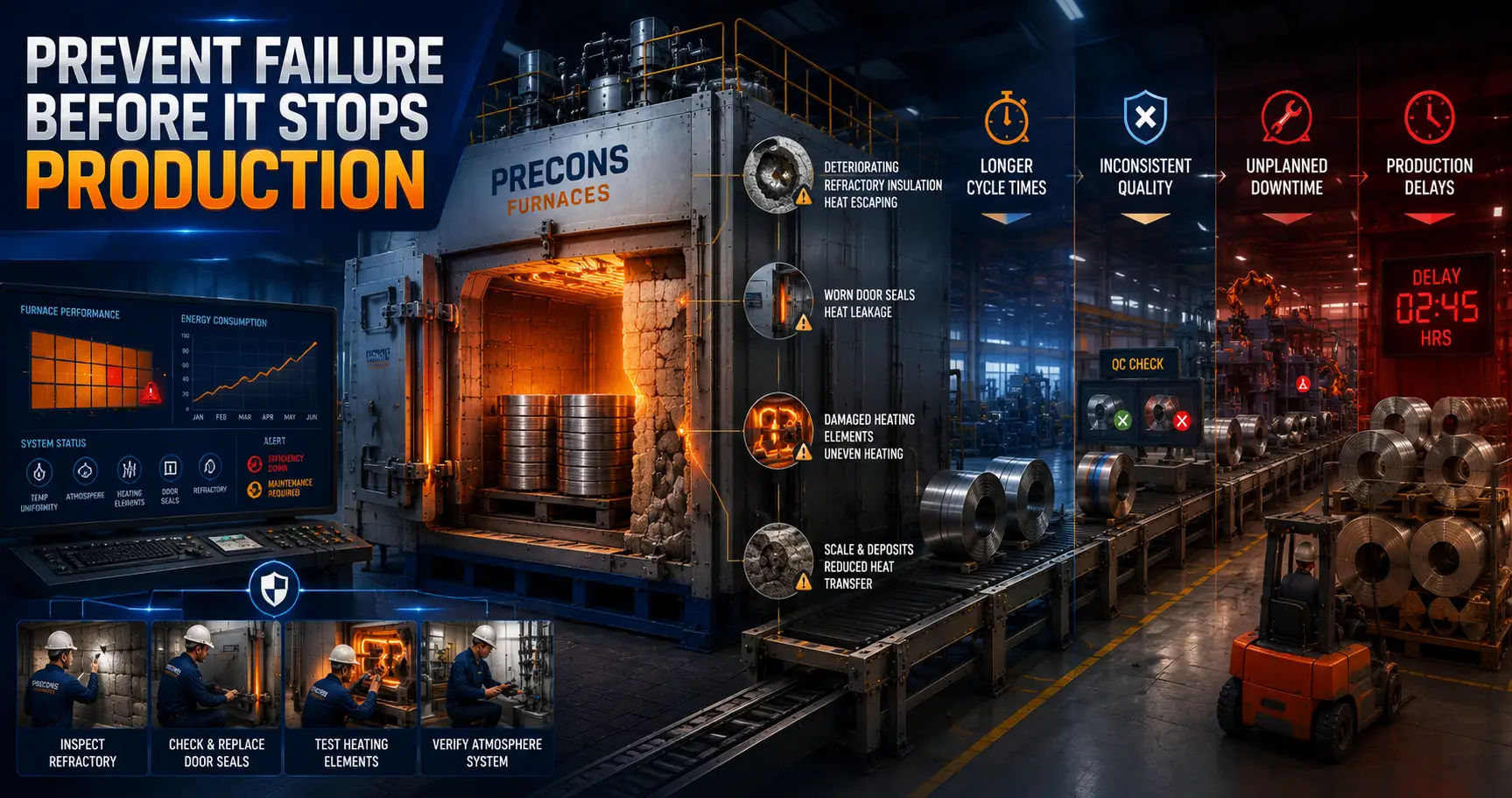
- Deteriorating refractory insulation losing effectiveness over thousands of thermal cycles
- Worn door seals allowing constant heat leakage during operation
- Damaged heating elements creating uneven temperature distribution
- Compromised atmosphere systems requiring longer cycles to compensate
- Accumulated scale and deposits reducing heat transfer efficiency
Each factor alone may seem insignificant, but combined effects compound quickly, turning minor inefficiencies into major operational problems.
How Heat Loss Triggers Production Delays
Extended Cycle Times
When industrial furnaces lose thermal efficiency, compensating requires longer heating and soaking periods:
- Increased energy consumption without proportional output gains
- Reduced daily throughput as cycles stretch beyond planned schedules
- Bottlenecked production lines waiting for delayed furnace cycles
- Missed delivery commitments cascading through the supply chain
Inconsistent Product Quality
Temperature non-uniformity from heat loss creates quality nightmares:
- Variable metallurgical properties across batches
- Increased rejection rates requiring costly rework
- Customer complaints damaging long-term relationships
- Additional inspection requirements slowing overall throughput
Unplanned Downtime
Progressive equipment degradation eventually forces emergency intervention:
- Sudden component failures halting production without warning
- Emergency repair costs far exceeding planned maintenance expenses
- Extended shutdown periods while awaiting replacement parts
- Lost production capacity during critical order fulfillment periods
Critical Warning Signs Manufacturers Miss
Energy Consumption Creep
Gradually increasing energy bills without corresponding production increases signal developing problems:
- Monthly consumption tracking reveals efficiency degradation trends
- Comparative analysis against baseline performance identifies issues early
- Early detection prevents minor problems from becoming major failures
Temperature Uniformity Drift
Regular thermal surveys often reveal problems before visible symptoms appear:
- Increasing temperature variance across chamber zones
- Extended soak times required to achieve specification compliance
- Growing discrepancies between setpoint and actual temperatures
Maintenance Pattern Changes
Shifting maintenance requirements indicate underlying deterioration:
- More frequent element replacements suggesting design or operational issues
- Increasing seal replacement frequency pointing to mechanical wear
- Growing refractory repair needs signaling insulation breakdown
The Path to Prevention
Proactive Maintenance Strategies
Systematic maintenance programs prevent minor issues from escalating:
- Scheduled refractory inspections identifying wear before failure
- Regular seal replacement maintaining atmosphere and thermal integrity
- Preventive element testing catching degradation early
- Documented maintenance history enabling predictive planning
Advanced Monitoring Technology
Modern control systems provide early warning capabilities:
- Real-time performance tracking identifying efficiency trends
- Automated alerts flagging parameters outside normal ranges
- Historical data analysis revealing gradual degradation patterns
- Predictive maintenance algorithms scheduling service before failures occur
Strategic Equipment Investment
Quality furnace construction fundamentally reduces failure susceptibility:
- Superior refractory materials extending service intervals
- Robust seal designs minimizing heat loss pathways
- Accessible maintenance architecture simplifying preventive care
- Engineering excellence reducing inherent failure points
The True Cost of Furnace Failures
Manufacturers experiencing recurring heat loss and production delays face compounding financial impacts: increased energy costs, elevated scrap rates, emergency repair expenses, missed delivery penalties, and long-term customer relationship damage that far exceeds the investment required for proper prevention.
Building Reliability Into Your Operations
Preventing furnace-related production delays requires combining quality equipment design with disciplined maintenance practices and modern monitoring technology—creating systems that identify problems before they impact production schedules.
Tired of unpredictable furnace performance disrupting your production schedule?
Precons Furnaces engineers industrial furnaces built for long-term reliability, incorporating superior refractory design, robust construction, and accessible maintenance architecture. Our four decades of engineering experience have taught us exactly where furnaces fail—and how to prevent it.