
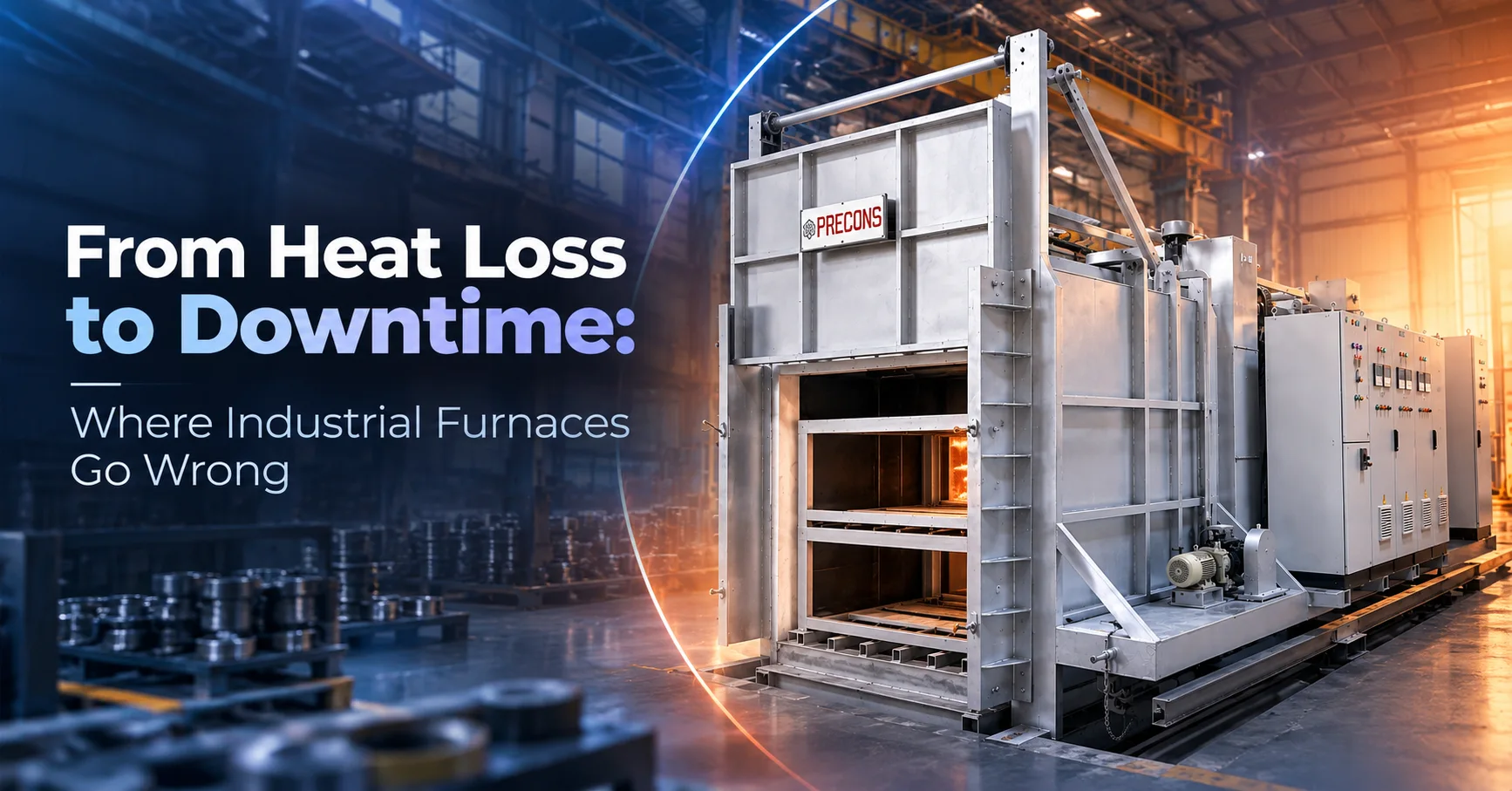
A routine production day can turn into a costly nightmare within hours when an industrial furnace begins failing. What starts as a minor temperature inconsistency often escalates into complete downtime—halting production lines, missing delivery deadlines, and forcing emergency repairs that far exceed the cost of prevention.
Understanding precisely where furnaces fail transforms reactive crisis management into proactive reliability engineering, protecting both production schedules and profitability.
The Anatomy of Furnace Failure
Downtime rarely strikes without warning. Instead, industrial furnaces deteriorate through predictable failure points that manufacturers frequently overlook until it’s too late:
- Refractory degradation from thousands of thermal expansion cycles
- Seal deterioration creating progressive heat leakage
- Heating element fatigue causing uneven temperature distribution
- Atmosphere system failures compromising process integrity
- Control system malfunctions disrupting precise temperature management
These individual weaknesses compound over time, transforming manageable maintenance items into catastrophic production stoppages.
The Critical Path: Heat Loss to Complete Downtime
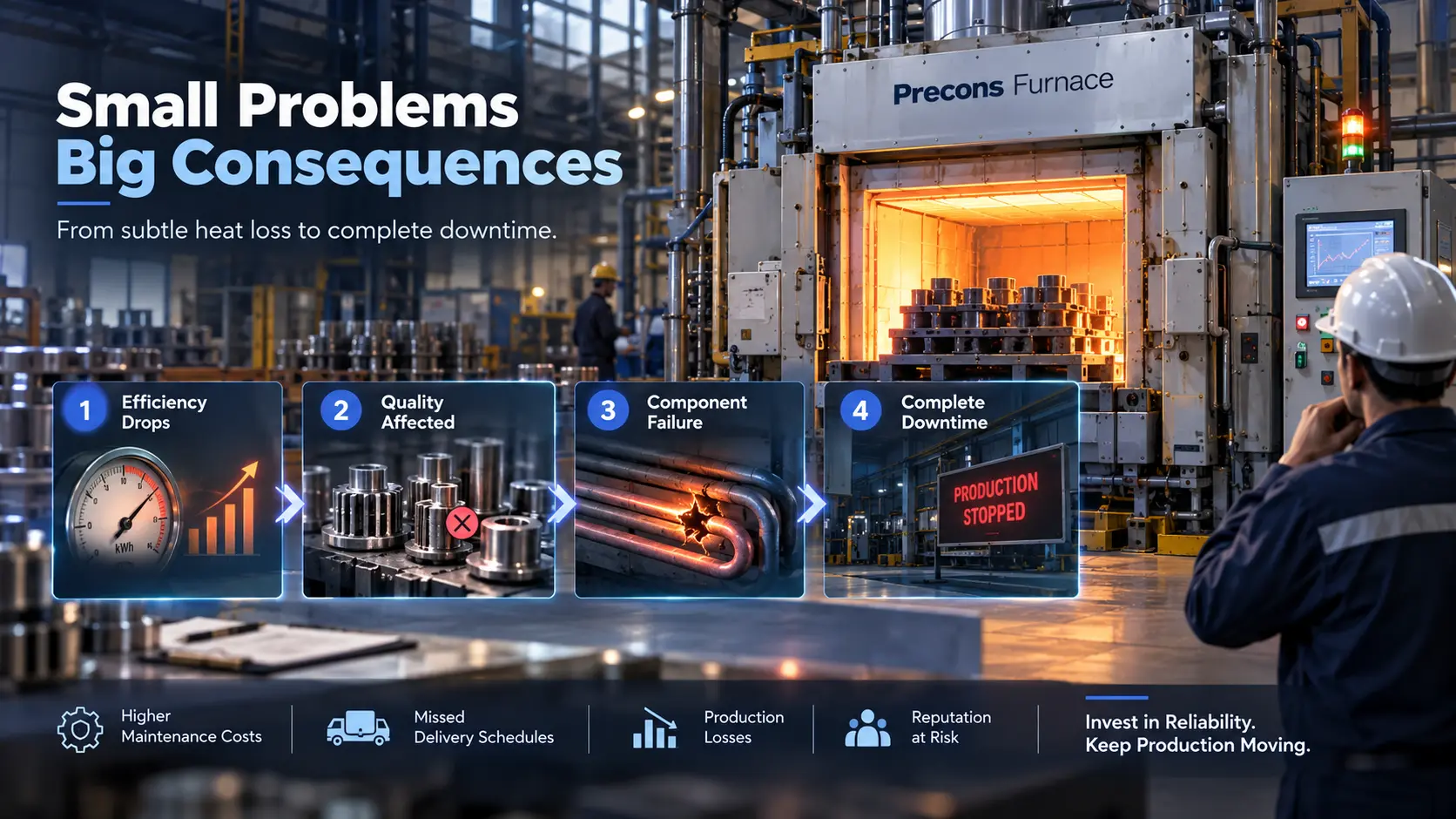
Stage One: Efficiency Erosion
Initial heat loss manifests subtly through:
- Rising energy consumption without corresponding output increases
- Extended cycle times as furnaces compensate for thermal inefficiency
- Gradual temperature drift from specified setpoints
Stage Two: Quality Degradation
Compromised thermal performance directly impacts production output:
- Inconsistent metallurgical properties across processed batches
- Increased rejection rates requiring costly rework or scrap
- Failed quality inspections delaying shipment schedules
Stage Three: Component Failure
Accumulated stress eventually triggers critical breakdowns:
- Heating element burnout from progressive overload compensation
- Refractory collapse in severely degraded sections
- Control system failures from prolonged operation outside design parameters
Stage Four: Complete Downtime
Total production halt occurs when:
- Safety systems trigger shutdown protecting personnel and equipment
- Critical components fail requiring immediate replacement
- Emergency repairs demand extended facility closure
Warning Signs That Precede Downtime
Performance Metrics Worth Monitoring
Vigilant manufacturers track key indicators before failure occurs:
- Energy consumption trends revealing efficiency degradation
- Cycle time increases indicating compensatory heating adjustments
- Temperature uniformity surveys identifying developing hot or cold zones
Physical Warning Indicators
Regular inspections reveal developing problems:
- Visible refractory cracking or discolouration
- Unusual noises from heating elements or mechanical components
- Increased frequency of minor repairs or adjustments
Documentation Red Flags
Maintenance record patterns often predict impending failures:
- Escalating repair frequency for the same components
- Growing parts replacement costs month over month
- Extended service technician visits addressing recurring issues
Breaking the Failure Cycle
Preventive Engineering Approaches
Quality furnace construction fundamentally reduces downtime risk:
- Premium refractory selection extending service life between repairs
- Robust seal engineering minimizing heat loss pathways from the start
- Accessible design architecture simplifying inspection and maintenance
Predictive Maintenance Technology
Modern monitoring systems identify problems before failure:
- Real-time thermal imaging detecting developing hot spots
- Automated performance alerts flagging abnormal parameters
- Data-driven maintenance scheduling replacing reactive repair cycles
Strategic Maintenance Partnerships
Experienced technical support prevents minor issues from becoming major disasters:
- Scheduled inspection programs catching problems early
- Rapid response capabilities minimizing downtime when issues arise
- Engineering expertise addressing root causes rather than symptoms
The Real Cost of Ignoring Warning Signs
Manufacturers who dismiss early failure indicators face devastating cumulative costs: emergency repair premiums, extended production shutdowns, missed customer commitments, quality-related rejections, and long-term reputation damage that dwarfs the investment required for proactive prevention.
The Compounding Cost Formula
Understanding how failure costs multiply helps justify furnace prevention investment:
- Direct repair cost (component + labor): Baseline expense
- Production loss during repair: Typically 3-5x the direct repair cost
- Quality-related costs from pre-failure degraded output: Often exceeds repair costs entirely
- Expedited shipping/parts costs for emergency repairs: 20-40% premium over planned maintenance
- Customer relationship costs: Difficult to quantify but frequently the most damaging long-term impact
Root Cause Categories Often Misdiagnosed
Many manufacturers treat symptoms rather than root causes, leading to repeat failures:
Misdiagnosis Pattern 1: Heating Element Replacement
- Symptom treated: Element burnout
- Actual root cause: Voltage irregularities or inadequate atmosphere control stressing elements
- Result: Same failure recurs within months
Misdiagnosis Pattern 2: Seal Replacement
- Symptom treated: Heat leakage
- Actual root cause: Structural frame distortion from thermal cycling stress
- Result: New seals fail prematurely due to underlying misalignment
Misdiagnosis Pattern 3: Refractory Patching
- Symptom treated: Visible cracking
- Actual root cause: Incorrect original installation or inappropriate material selection for application
- Result: Patches fail repeatedly at the same locations
Engineering Reliability From the Start
The most effective downtime prevention begins before installation—with furnace designs engineered specifically to minimize failure points through superior materials, robust construction, and accessible maintenance architecture.
Ready to eliminate the unpredictable downtime threatening your production schedule? Precons Furnaces builds industrial furnaces engineered for exceptional reliability, incorporating premium refractory systems, robust seal design, and accessible maintenance architecture developed across four decades of manufacturing experience.
Stop firefighting furnace failures and start preventing them. [Get Your Free Schedule Consultation] – Our engineers will identify the specific failure points threatening your current equipment and provide a prioritized action plan to protect your production schedule before costly downtime strikes.