
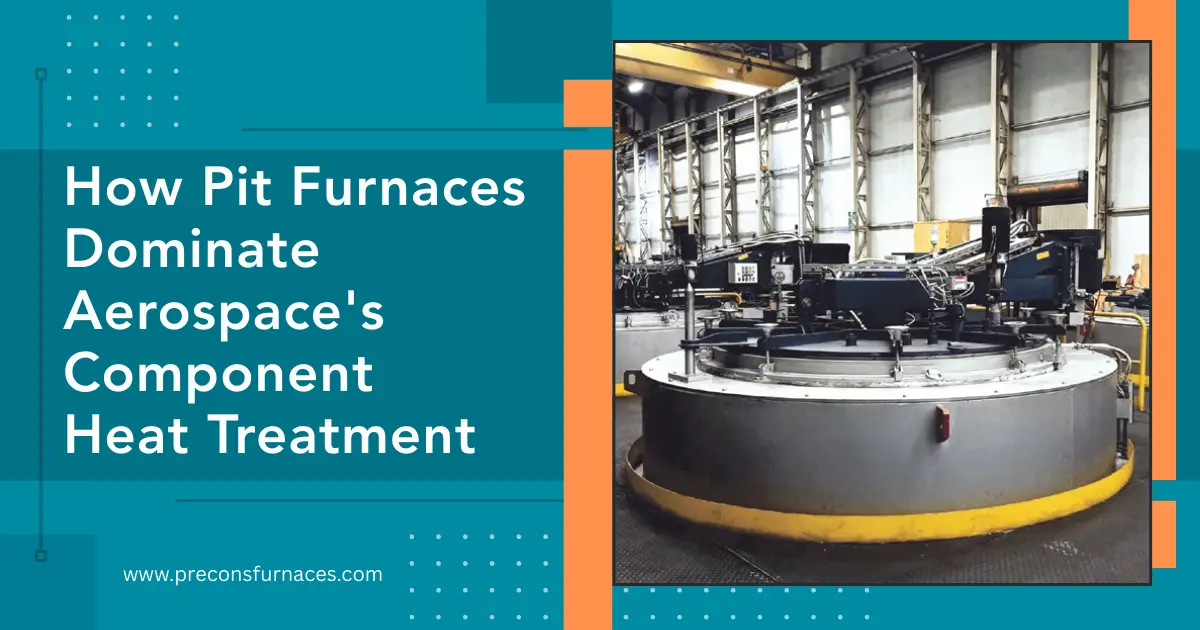
When aerospace manufacturers need to heat-treat massive landing gear assemblies, turbine shafts exceeding five meters in length, or critical structural components weighing several tons, conventional horizontal furnaces present insurmountable challenges. The solution that has become indispensable for large aerospace components? Pit type furnaces—specialized vertical heating systems engineered specifically for the unique demands of oversized, heavy aerospace parts.
But what specific advantages make this vertical configuration so essential for aerospace heat treatment operations, and why do leading manufacturers consistently choose pit furnaces for their most critical components?
The Vertical Advantage: Gravity-Assisted Loading
Pit type furnaces feature a recessed vertical chamber extending below floor level, allowing components to be lowered directly into the heating zone using overhead cranes. This seemingly simple design innovation solves multiple aerospace manufacturing challenges simultaneously.
Simplified Handling of Massive Components:
- Vertical suspension eliminates complex fixtures required for horizontal positioning
- Gravity-assisted loading reduces handling equipment complexity
- Straight-line crane movements minimize risk during component transfer
- Direct lowering capability accommodates extremely long parts without angular maneuvering
For aerospace components where dimensional precision and surface integrity are non-negotiable, the simplified handling of pit furnaces dramatically reduces damage risks during loading and unloading operations.
Space Efficiency in Production Facilities
Aerospace manufacturing facilities face constant floor space constraints. Pit type furnaces deliver remarkable spatial advantages:
Minimal Footprint: The below-floor chamber design requires only the top opening and control station at floor level, while the heating chamber extends downward. This configuration:
- Frees valuable production floor space for assembly operations
- Eliminates horizontal clearance requirements needed by traditional furnaces
- Reduces facility modification costs when adding heat treatment capacity
- Enables placement near assembly stations optimizing workflow
Height Utilization: Facilities with adequate ceiling clearances can process extraordinarily long components—turbine shafts, structural members, and landing gear assemblies—that would be impossible in horizontal configurations without massive facility modifications.
Temperature Uniformity for Long Components
Aerospace specifications demand exceptional temperature uniformity throughout component volumes, particularly challenging with long, slender parts. Pit type furnaces excel through:
Natural Convection Benefits: The vertical orientation creates ideal convection patterns where heated air rises naturally through the chamber, providing:
- Uniform temperature distribution along component length
- Reduced temperature stratification compared to horizontal chambers
- Consistent heating rates regardless of component position
Multi-Zone Control: Advanced pit furnaces incorporate independent heating zones at different vertical levels, enabling:
- Precise temperature profiling for components with varying cross-sections
- Compensation for thermal gradients in extremely long parts
- Optimization of energy consumption by activating only necessary zones
Atmosphere Control and Metallurgical Quality
Aerospace components manufactured from titanium, nickel alloys, and speciality steels require protective atmospheres to prevent oxidation and contamination during heat treatment.
Superior Atmosphere Management: The sealed pit design with top-mounted cover creates:
- Contained atmosphere environment with minimal gas consumption
- Consistent atmosphere distribution throughout vertical chamber
- Reduced contamination risks from facility environment
- Efficient atmosphere purging supporting rapid changeovers between different gas requirements
Gravity-Driven Atmosphere Flow: Heavier protective gases naturally settle downward through the chamber, creating ideal atmosphere distribution for parts suspended vertically—a natural advantage impossible in horizontal configurations.
Specialized Aerospace Applications
Pit type furnaces demonstrate exceptional suitability for specific aerospace heat treatment processes:
Solution Heat Treatment:
- Aluminum aerospace forgings requiring precise temperature control
- Titanium alloy components demanding protective atmospheres
- Large structural parts for airframe assemblies
Stress Relief Operations:
- Landing gear components after machining operations
- Engine mount structures eliminating residual stresses
- Hydraulic system housings ensuring dimensional stability
Aging and Precipitation Hardening:
- High-strength aluminum alloys for critical structural applications
- Nickel-based superalloys for turbine components
- Specialty steel parts requiring controlled cooling rates
Quality Assurance and Certification
Aerospace applications demand rigorous quality documentation. Modern pit type furnaces provide:
Advanced Process Control:
- Multi-point temperature monitoring throughout chamber depth
- Automated data logging supporting AS9100 certification requirements
- Recipe management systems ensuring consistent cycle execution
- Traceability features linking components to specific heat treatment cycles
Performance Qualification:Temperature uniformity surveys and system accuracy tests verify that furnaces meet stringent aerospace specifications, with documentation supporting component certification and regulatory compliance.
Energy Efficiency and Operating Economics
Despite their specialized nature, pit type furnaces deliver impressive operational efficiency:
Reduced Heat Loss: The below-floor chamber location provides natural insulation from facility air currents, while efficient refractory systems minimize energy consumption during extended soak periods common in aerospace heat treatment cycles.
Maintenance Accessibility: Top-loading design provides excellent access for heating element replacement, thermocouple maintenance, and refractory inspection, reducing downtime and maintenance costs.
Processing large aerospace components that demand precision heat treatment?
Precons Furnaces engineers pit type furnaces specifically for aerospace applications, delivering the temperature uniformity, atmosphere control, and reliability required for critical components. Our systems serve leading aerospace manufacturers worldwide, supporting certification requirements for the industry’s most demanding applications.