
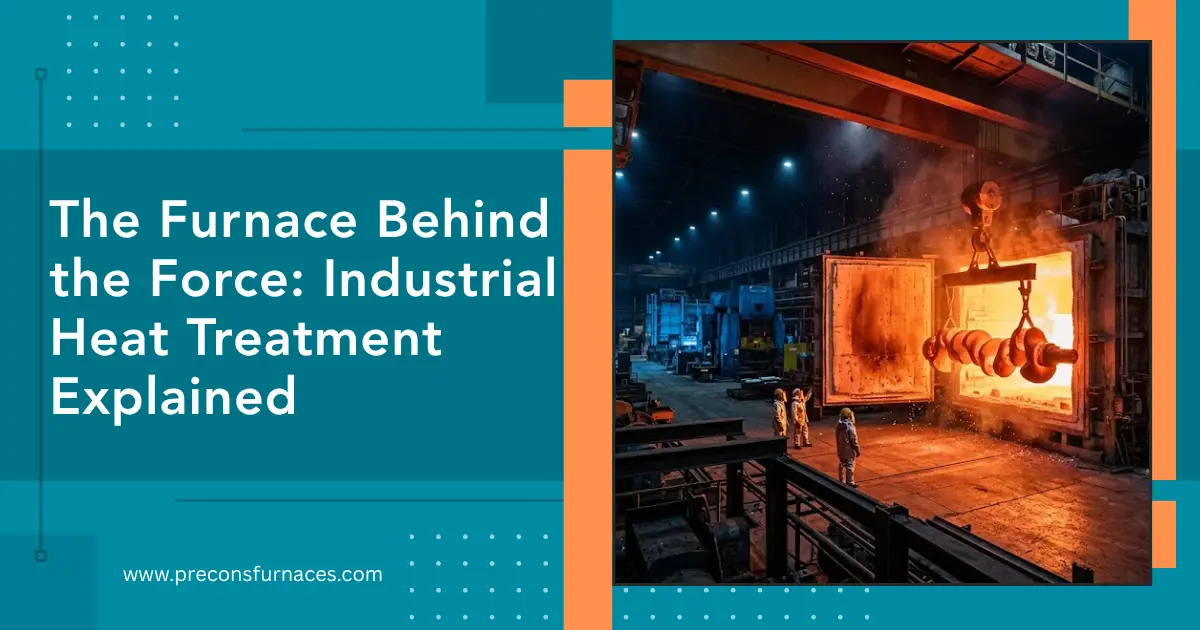
In heavy engineering, the margin for error is virtually zero. Whether it’s a massive structural component for a power plant or a critical gear assembly in mining equipment, the mechanical integrity of metal parts can determine whether an operation runs safely — or fails catastrophically. This is exactly why heat treatment furnaces are not just useful tools; they are non-negotiable assets in heavy engineering workflows.
The Backbone of Metal Performance
Raw metal, straight from forging or machining, rarely meets the performance demands of heavy industrial applications. It needs to be strengthened, stress-relieved, and structurally stabilized — and that transformation happens inside a heat treatment furnace.
Through carefully controlled heating and cooling cycles, these furnaces alter a metal’s microstructure at the molecular level, unlocking properties that no other manufacturing process can achieve. The outcome is metal that performs reliably under extreme loads, high temperatures, and relentless mechanical stress.
Why Heavy Engineering Specifically Demands Heat Treatment
Heavy engineering components operate in environments that would destroy ordinary metal. Consider the pressures involved in:
- Oil & gas pipelines — where high-pressure flow and corrosive media demand superior tensile strength
- Mining machinery — where abrasion resistance separates a component that lasts years from one that fails in weeks
- Power generation turbines — where fatigue resistance at elevated temperatures is a design prerequisite
- Shipbuilding & marine structures — where weld stress relief prevents catastrophic joint failure
- Heavy construction equipment — where load-bearing parts must maintain hardness through continuous impact cycles
In each of these applications, heat treatment isn’t an optional finishing step — it’s a fundamental part of the engineering specification.
What Heat Treatment Furnaces Actually Do
Modern industrial heat treatment furnaces perform a range of critical processes:
- Annealing — softens metal, improves machinability, and relieves internal stresses caused by forming
- Normalizing — refines grain structure for improved toughness and uniformity
- Hardening & Quenching — rapidly increases surface and core hardness for wear resistance
- Tempering — reduces brittleness post-hardening while retaining strength
- Stress Relieving — eliminates residual stresses from welding or heavy machining operations
Each of these processes requires precise temperature control, consistent atmosphere management, and repeatable thermal cycles — capabilities that only a well-engineered industrial furnace can deliver consistently at scale.
The Cost of Skipping Heat Treatment
Cutting corners on heat treatment in heavy engineering isn’t just a quality risk — it’s a financial and safety liability. Premature component failure in heavy equipment can result in unplanned downtime, massive repair costs, regulatory penalties, and, in the worst cases, irreversible structural failures that endanger lives.
Investing in the right heat treatment process — and the right furnace technology — is always more economical than the cost of failure downstream.
Engineering Reliability Starts with the Right Equipment
For heavy engineering manufacturers who understand that quality cannot be compromised, equipment choice matters deeply. Precons Furnaces brings decades of engineering expertise to industrial heat treatment — delivering furnace solutions that are built for the demands of heavy industry, with the precision and reliability that critical applications require.
When the stakes are high, the furnace behind the process has to be higher.
Don’t leave metal performance to chance. If your heavy engineering operations demand consistent quality, process reliability, and long component life, explore what Precons Furnaces can deliver.