
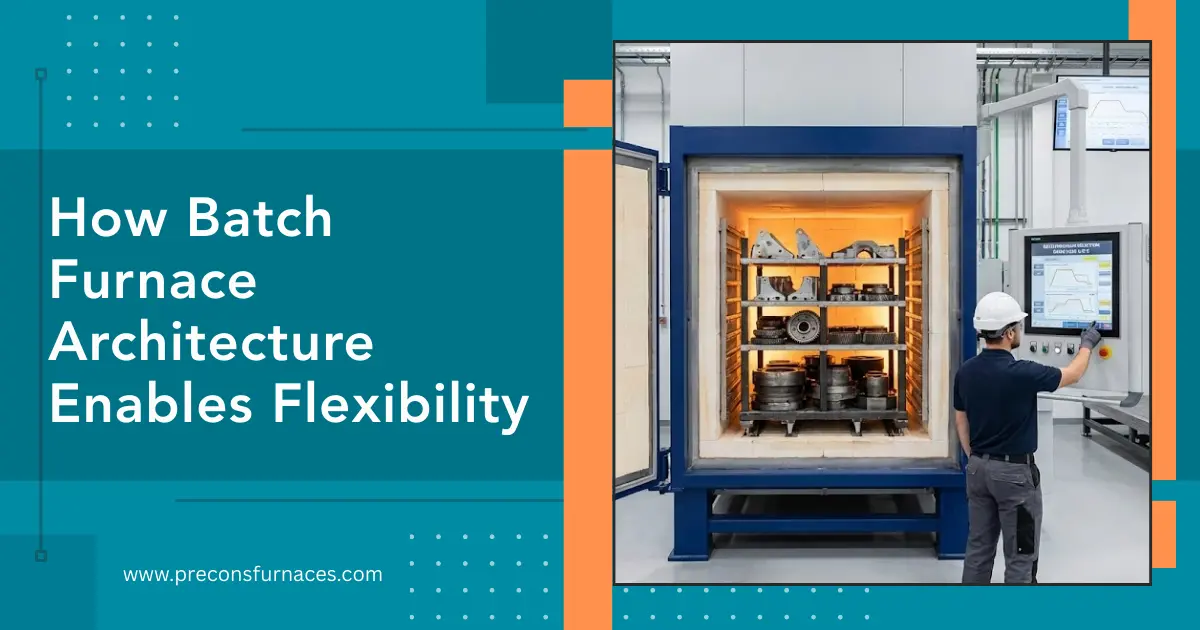
Modern manufacturing rarely follows a predictable pattern. One morning, you’re processing hardened tool steel components, and by afternoon, your production team needs to anneal a completely different batch of aluminium alloy. This constant production variability creates significant challenges for heat treatment operations relying on rigid, single-purpose furnace systems.
Batch furnaces have emerged as the definitive solution for manufacturers navigating unpredictable, mixed production schedules—delivering remarkable operational flexibility without compromising heat treatment quality or consistency.
The Mixed Production Challenge
Manufacturing facilities serving diverse industries face relentless scheduling pressures:
- Varying batch sizes from single prototype components to hundreds of production parts
- Different materials require unique temperature profiles and atmospheres
- Urgent orders demanding rapid changeovers between production runs
- Seasonal demand fluctuations create irregular production patterns
- Custom and standard components are processed within the same facility
Traditional continuous furnace systems excel at high-volume production but struggle dramatically when schedules change unexpectedly. Batch furnaces solve this problem by design.
How Batch Furnace Architecture Enables Flexibility
Unlike continuous systems constrained by fixed conveyor speeds and predetermined process parameters, batch furnaces provide complete cycle independence for every production run.
Independent Cycle Programming
Each batch receives its own precisely customized thermal cycle, including:
- Tailored heating rates matching specific material requirements
- Controlled soak temperatures optimized for different alloys
- Atmospheric compositions switch between neutral, oxidizing, or reducing environments
- Cooling rate profiles achieving the exact metallurgical properties required
Unrestricted Loading Flexibility
Batch furnace chambers accommodate virtually any combination of components:
- Mixed component geometries within single processing loads
- Variable batch weights from small research samples to full production loads
- Different fixture configurations for diverse part shapes
- Simultaneous processing of components with similar thermal requirements
Operational Advantages for Mixed Schedules
Rapid Changeover Capability
When production schedules change—and they always do—batch furnaces respond immediately. Unlike continuous systems that require extended transition periods, batch furnaces can accept new recipes and begin processing different materials within the same operational day.
Quality Consistency Across Diverse Products
Dedicated cycle control for each batch ensures quality consistency regardless of production mix:
- Precise temperature uniformity throughout the chamber volume
- Repeatable atmosphere conditions, batch after batch
- Documented process traceability supporting quality certification
- Independent quality control for each production run
Energy Optimization for Variable Loads
Batch furnaces eliminate continuous energy consumption associated with running large furnaces during low-production periods:
- Only active during actual processing cycles
- Adjustable chamber utilization matching actual batch requirements
- Reduced idle energy costs compared to always-on continuous systems
- Scalable throughput aligning energy consumption with production demands
Strategic Applications Across Industries
Batch furnace flexibility serves critical requirements across multiple sectors:
Aerospace and Defence: Prototype component development requiring unique thermal cycles, low-volume speciality alloy heat treatment, and certification testing batches needing full documentation.
Automotive Manufacturing: Mixed component production combining different steel grades, seasonal model changeovers requiring different heat treatment specifications, and supplier quality batches with strict traceability requirements.
Heavy Engineering: Custom component orders with unique stress relief requirements, research and development samples requiring experimental thermal cycles, and maintenance and repair operations for diverse equipment components.
Advanced Control Systems: The Flexibility Enabler
Modern batch furnace control technology transforms operational flexibility:
- Recipe libraries storing hundreds of pre-validated thermal cycles
- One-touch program selection enabling instant production changeovers
- Automated documentation generates batch records automatically
- Remote monitoring capability supporting multi-shift operations
- Predictive maintenance alerts prevent unexpected production interruptions
Economic Benefits of Batch Processing Flexibility
Manufacturers utilizing optimally configured batch furnaces consistently achieve:
- Lower per-unit processing costs through efficient batch scheduling
- Reduced overtime expenses from optimized production planning
- Minimized scrap rates through precise cycle control
- Faster customer response times, accommodating urgent orders
- Single equipment investment serving multiple production needs
- Reduced facility footprint compared to multiple specialized systems
Ready to eliminate production scheduling constraints with batch furnace flexibility?
Precons Furnaces engineers custom batch furnace solutions serving manufacturers across aerospace, automotive, and heavy engineering sectors. Our systems deliver the operational flexibility, precise cycle control, and robust reliability that mixed production schedules demand.