
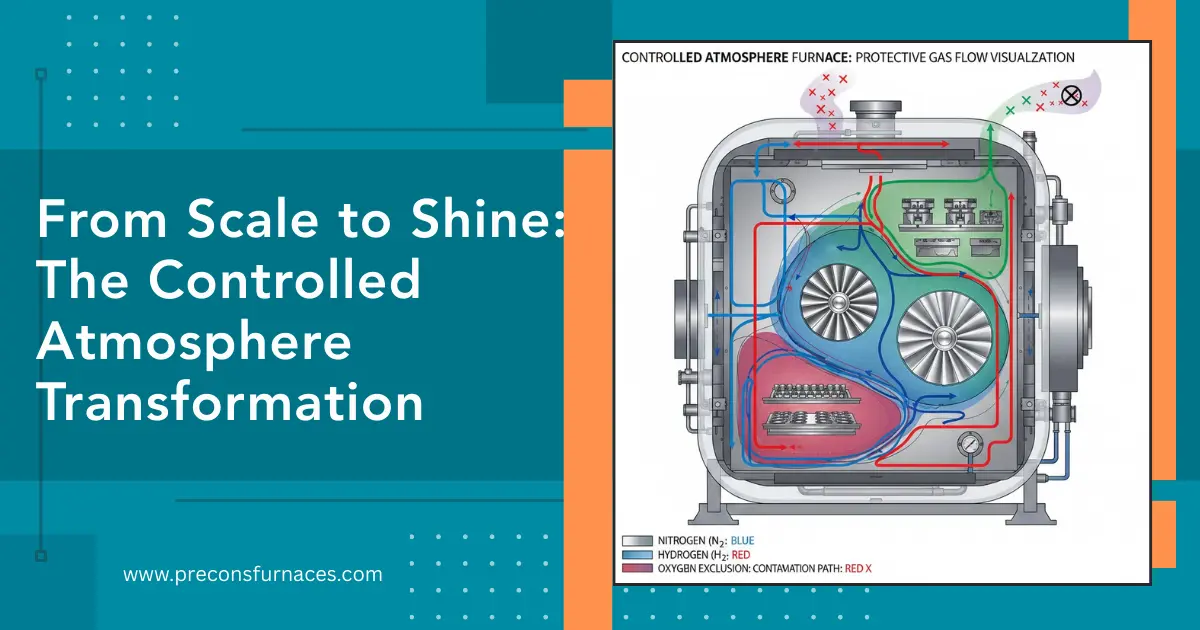
A single microscopic layer of oxide can transform a precision aerospace component from mission-critical hardware into expensive scrap. For manufacturers processing titanium alloys, specialty steels, and high-value metals, oxidation represents an unforgiving enemy that compromises surface integrity, dimensional accuracy, and mechanical properties in seconds.
The difference between components meeting stringent specifications and costly rejections? Controlled atmosphere furnaces that create precisely managed environments where oxidation simply cannot occur.
The Oxidation Challenge in High-Value Manufacturing
When metals reach elevated temperatures in the presence of oxygen, rapid surface oxidation is inevitable. This chemical reaction creates multiple cascading problems:
- Scale formation requiring expensive secondary removal operations
- Surface contamination compromising coating adhesion and bonding
- Dimensional changes from material loss at component surfaces
- Decarburization in steel reducing surface hardness and strength
- Alloying element depletion altering critical material properties
For aerospace, nuclear, and defense applications, even minimal surface oxidation means automatic component rejection—making atmosphere control absolutely non-negotiable.
How Controlled Atmosphere Technology Works
Controlled atmosphere furnaces replace air with carefully selected protective gases that eliminate oxidation-causing oxygen. This seemingly simple concept requires sophisticated engineering execution:
Sealed Chamber Architecture
Gas-tight furnace construction prevents atmospheric contamination through:
- Precision-machined door seals maintaining atmosphere integrity
- Welded chamber construction eliminating leak paths
- Mechanical seals on moving components preserving gas purity
- Pressure differential management preventing air infiltration
Strategic Gas Selection
Different metals and processes demand specific protective atmospheres:
Neutral Atmospheres (Nitrogen, Argon):
- Preventing oxidation without chemical interaction
- Ideal for stainless steels and nickel alloys
- Cost-effective protection for many applications
Reducing Atmospheres (Hydrogen, Cracked Ammonia):
- Active oxide removal from component surfaces
- Bright annealing maintaining shiny surface finish
- Decarburization prevention in carbon steels
Vacuum Atmospheres:
- Ultimate protection for reactive metals like titanium
- Contamination elimination for critical aerospace components
- Precise control over extremely sensitive processes
Precision Atmosphere Management Systems
Modern controlled atmosphere furnaces incorporate advanced monitoring and control:
Real-Time Gas Composition Monitoring:
- Oxygen analyzers detecting contamination at parts-per-million levels
- Dew point sensors ensuring moisture-free atmospheres
- Carbon potential control maintaining precise surface chemistry
Automated Flow Control:Computerized gas delivery systems maintain optimal conditions throughout thermal cycles, adjusting flow rates based on chamber temperature, load mass, and process requirements.
Critical Applications Demanding Atmosphere Control
Aerospace Component Processing
Titanium alloy heat treatment requires absolute oxygen exclusion:
- Solution treating and aging operations
- Stress relief of machined components
- Annealing for formability enhancement
Stainless Steel Bright Annealing
Hydrogen atmosphere processing delivers:
- Oxide-free surfaces eliminating pickling operations
- Maintained surface finish reducing manufacturing steps
- Improved corrosion resistance through clean surfaces
Tool Steel Hardening
Controlled atmospheres prevent decarburization during:
- Austenitizing before quenching
- High-temperature tempering operations
- Double-tempering cycles for dimensional stability
Nuclear Industry Applications
Ultra-high purity atmospheres ensure:
- Contamination-free processing of reactor components
- Precise material properties meeting nuclear standards
- Complete surface integrity for critical applications
The Surface Quality Advantage
Components processed in atmosphere controlled furnaces demonstrate remarkable surface quality improvements:
Elimination of Secondary Operations:
- No scale removal required after heat treatment
- Direct-to-coating capability reducing processing steps
- Reduced material loss preserving component dimensions
Enhanced Performance:
- Superior fatigue resistance from clean, oxide-free surfaces
- Improved coating adhesion on uncontaminated surfaces
- Extended service life through maintained material properties
Economic and Quality Benefits
Manufacturers utilizing precision atmosphere control achieve substantial advantages:
Quality Improvements:
- Virtually zero oxidation-related rejections
- Consistent surface finish batch after batch
- Reduced inspection requirements from reliable processing
Cost Savings:
- Eliminated secondary cleaning operations
- Reduced material waste from dimensional preservation
- Lower energy consumption eliminating reheat cycles for correction
Production Efficiency:
- Faster throughput without cleaning steps
- Improved first-pass yield reducing rework
- Enhanced customer satisfaction through consistent quality
Selecting the Right Atmosphere System
Optimal atmosphere furnace configuration requires careful matching to application needs: metal types being processed, temperature requirements, production volumes, and required atmosphere purity levels all influence system design.
Processing critical metals that demand absolute oxidation prevention? Precons Furnaces engineers controlled atmosphere furnaces serving aerospace, nuclear, and precision manufacturing applications worldwide. Our systems deliver the gas purity, temperature uniformity, and atmosphere integrity that critical metal processing demands.